

What a week it’s been in Leicester! Even those on the far side of The Pond will be aware that the “mortal remains” of King Richard III were interred at Leicester Cathedral this week. The national and international reaction has far exceeded expectations, as have the number of visitors to the City and County.
On the Sunday at the start of the week the coffin containing the bones was taken from the University of Leicester, where they have been since they were discovered under a City Council staff car park in 2012, and was transported in a cortège out into the County to Fen Farm, where it is believed that King Richard was killed in the Battle of Bosworth in 1485, and then through Dadlington where many of those killed in the Battle of Bosworth buried. The hearse and other vehicles in the procession subsequently passed through Bosworth village and then on to the Battle of Bosworth visitor centre located at the spot where, until artefacts were found at Fen Farm in 2010, it was thought that the battle took place. A brief service took place at most of these locations. The cortege travelled back to Leicester where the coffin was transferred onto a horse drawn cart at Bow Bridge, the medieval entrance to the City (and still a main thoroughfare) which Richard passed over on his way to battle, and over which his body was carried afterwards for burial in Greyfriars Priory, the location of which was lost after the reformation. That’s the history lesson over.
We decided to go to Dadlington, just 20 minutes away, to see the cortege, aiming to arrive a couple of hours before the coffin arrived. Just as well that we did – cars were already queuing for the car park at a school in an adjacent village, and we had a half-mile or so walk to Dadlington. We had plenty of time to walk around the crowded village, identifying the processional route and establish ourselves at a suitable location, opting for a place on an embankment at the edge of the churchyard above the lane where the cortege would enter the village. Actually we each had separate locations – even with over an hour to wait there was only room for Chantal in the churchyard, and I stood on the other side of the hedge, precariously balanced on the steep bank above the lane and just below Chantal on the far side of the hedge. While waiting for the cortege I listened to its progress on local radio using my smartphone, updating Chantal and those around me.
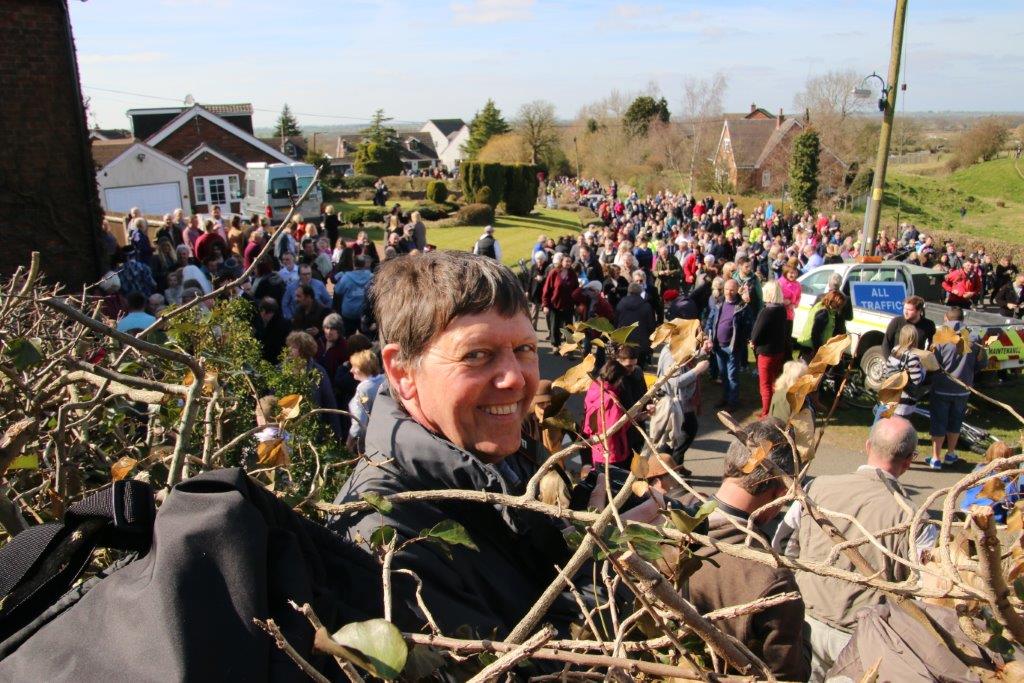
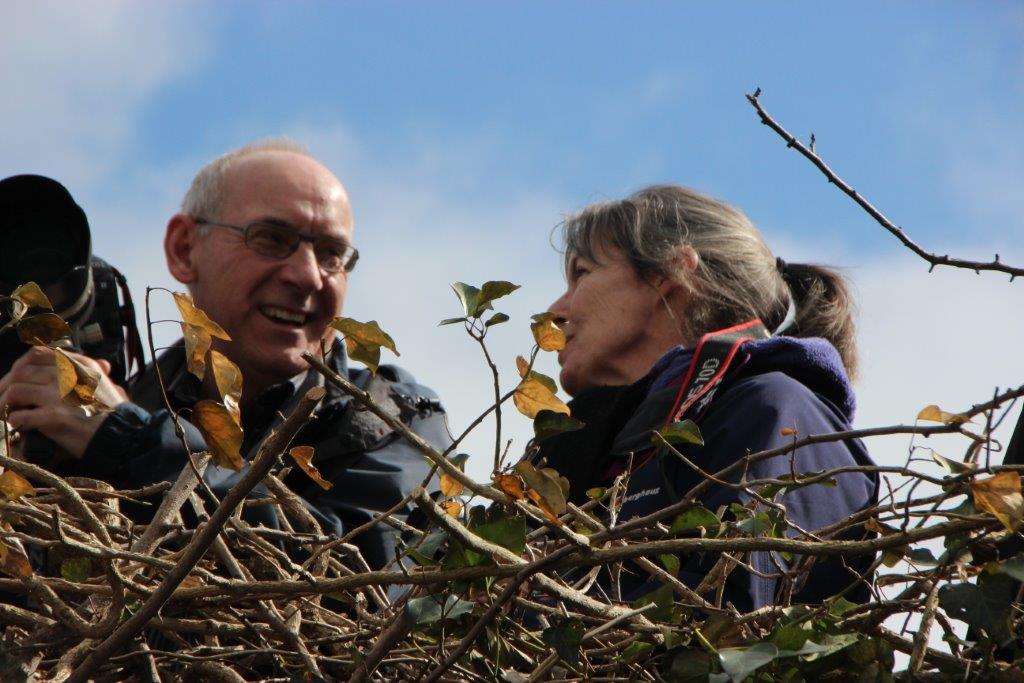 The local roads were all closed to traffic, and a lone cyclist toiled up the hill towards us and into the village, along the lane thronged on either side with waiting spectators looking for entertainment to pass the time. He was warmly applauded and cheered, as though he was Bradley Wiggins heading for the finishing line at the end of a race. He quickly got over his embarrassment to wave at the crowds as he cycled passed.
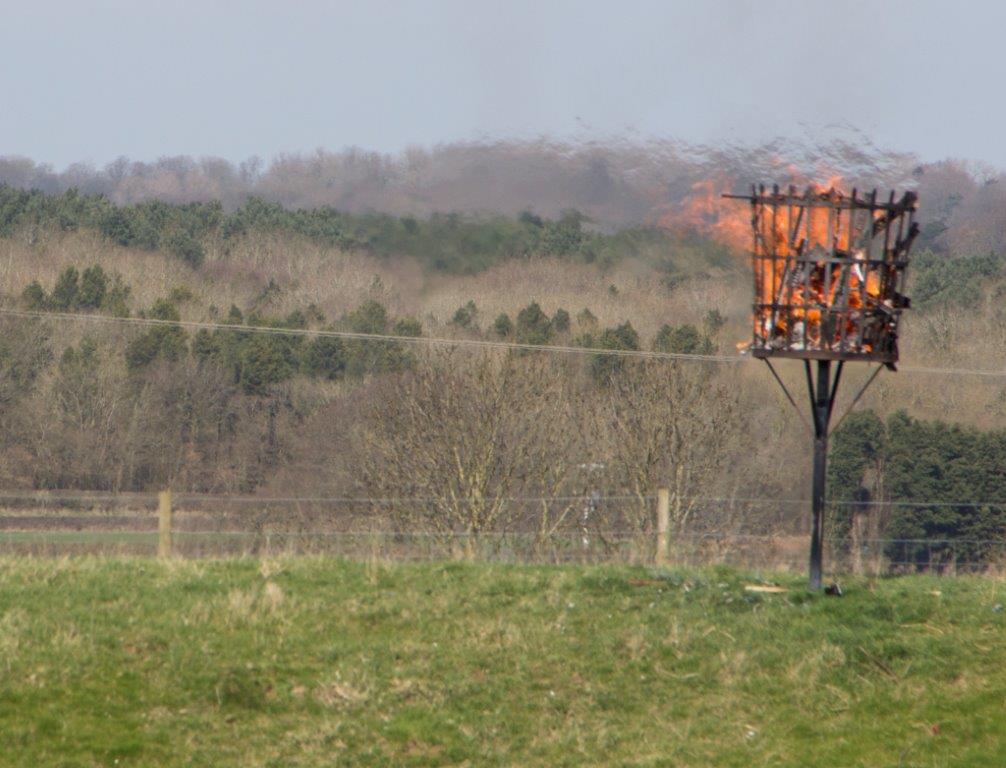
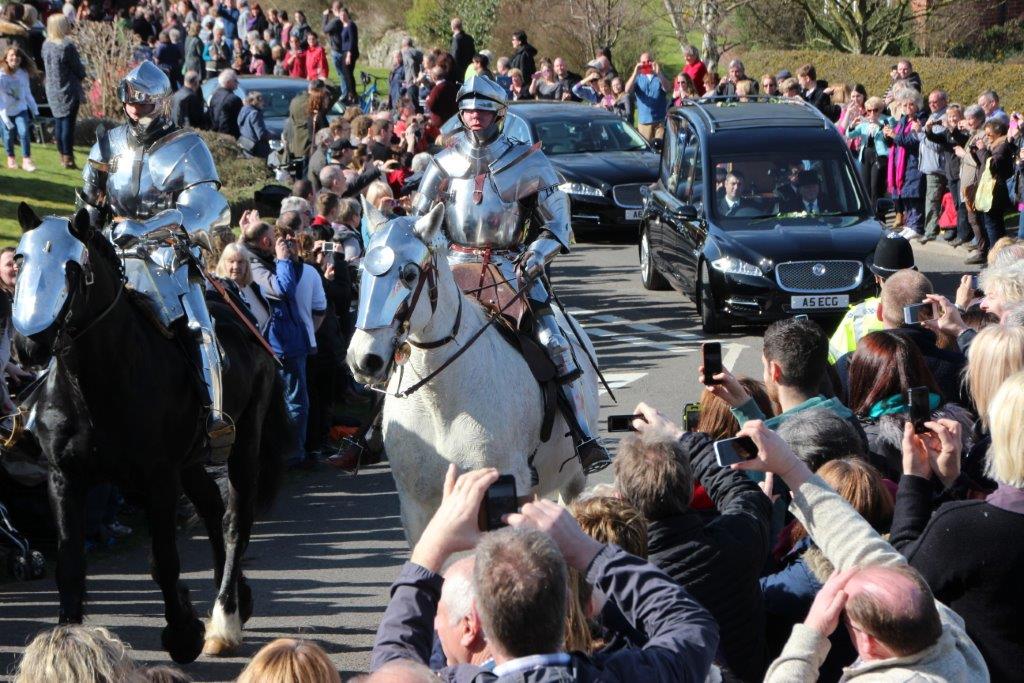
Eventually a beacon was lit, the church bells started tolling, dogs started barking, and we could see the vehicles of the cortege approaching along the country lanes in the distance, disappearing briefly before reappearing around a bend, escorted by Police motorcyclists and led into the village by two mounted knights in armour. The hearse, behind the knights, was followed by the cars bearing the dignitaries. The cortege was greeted with just quiet applause as it passed, with many people throwing white roses, the symbol of the House of York, onto the vehicles.
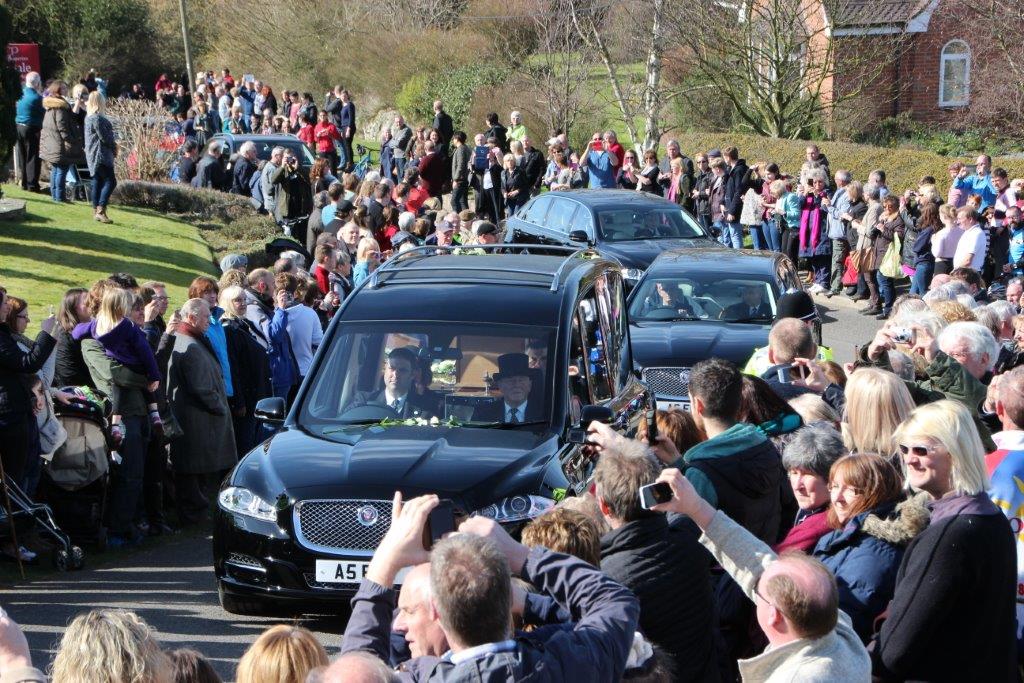
There was a brief service on the village green, but thanks to the crowds we couldn’t get near to this, although were able to see the cortege leave the village again on its way to Bosworth.
Apparently 500 people were expected at Dadlington, with maybe up to 1000 if the weather was nice, which it was. 5000 people came to the village to see the cortege pass through. Its not surprising that once the procession had left there were long queues for the hot dogs/ice creams/beer tent and the local pub was packed. We joined the hordes of folk heading back to the car park, and returned home to watch the coverage on Channel 4 of the cortege entering Leicester and arriving at the Cathedral. The streets were packed.
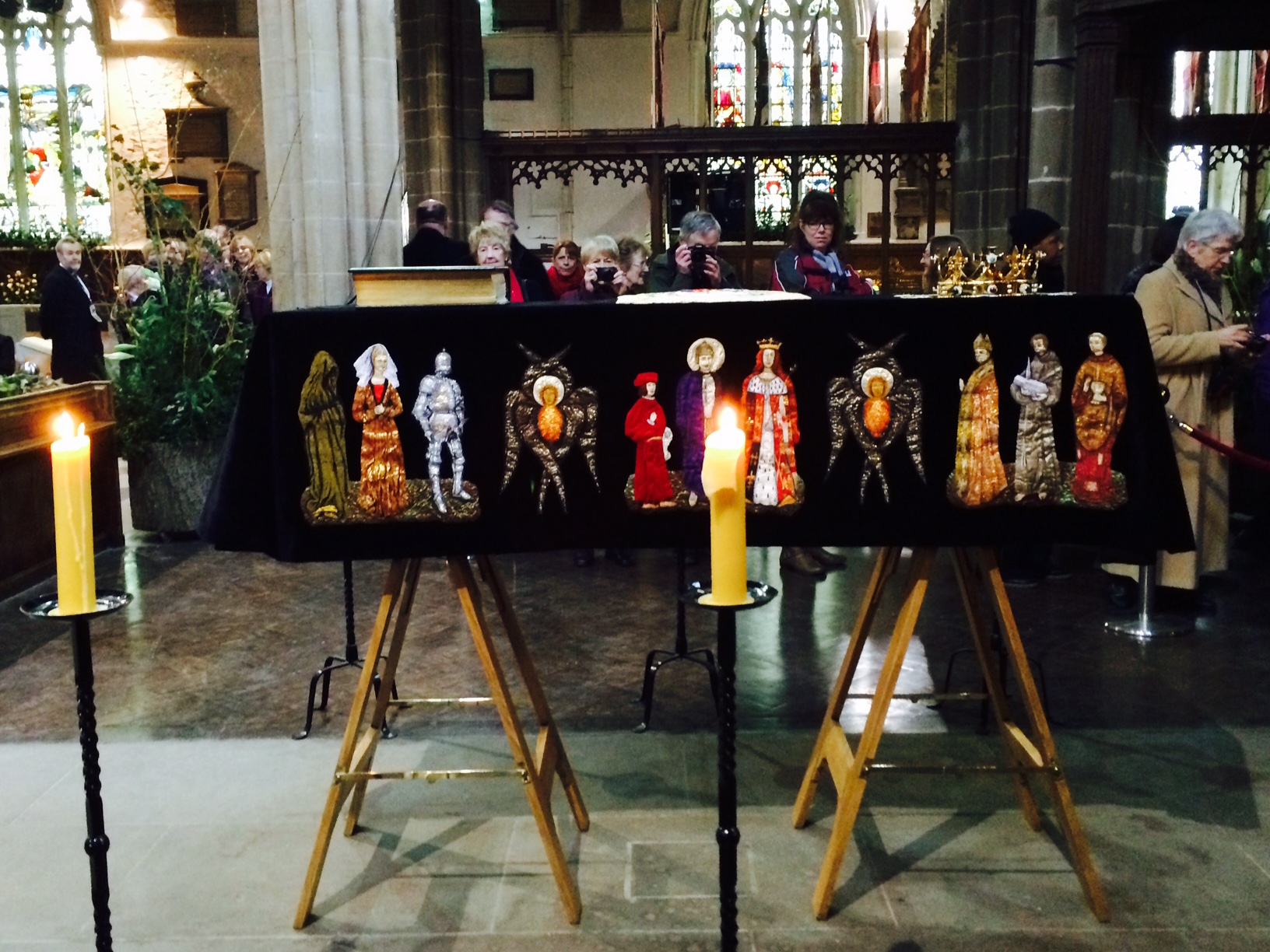
We had hoped to visit the Cathedral to see the coffin “lying in State”, but with queues around the block, and up to four hours to wait, I abandoned the idea. Chantal and one of her colleagues visited shortly after the Cathedral opened for the day early on Wednesday, and queued for 45 minutes to view the coffin.
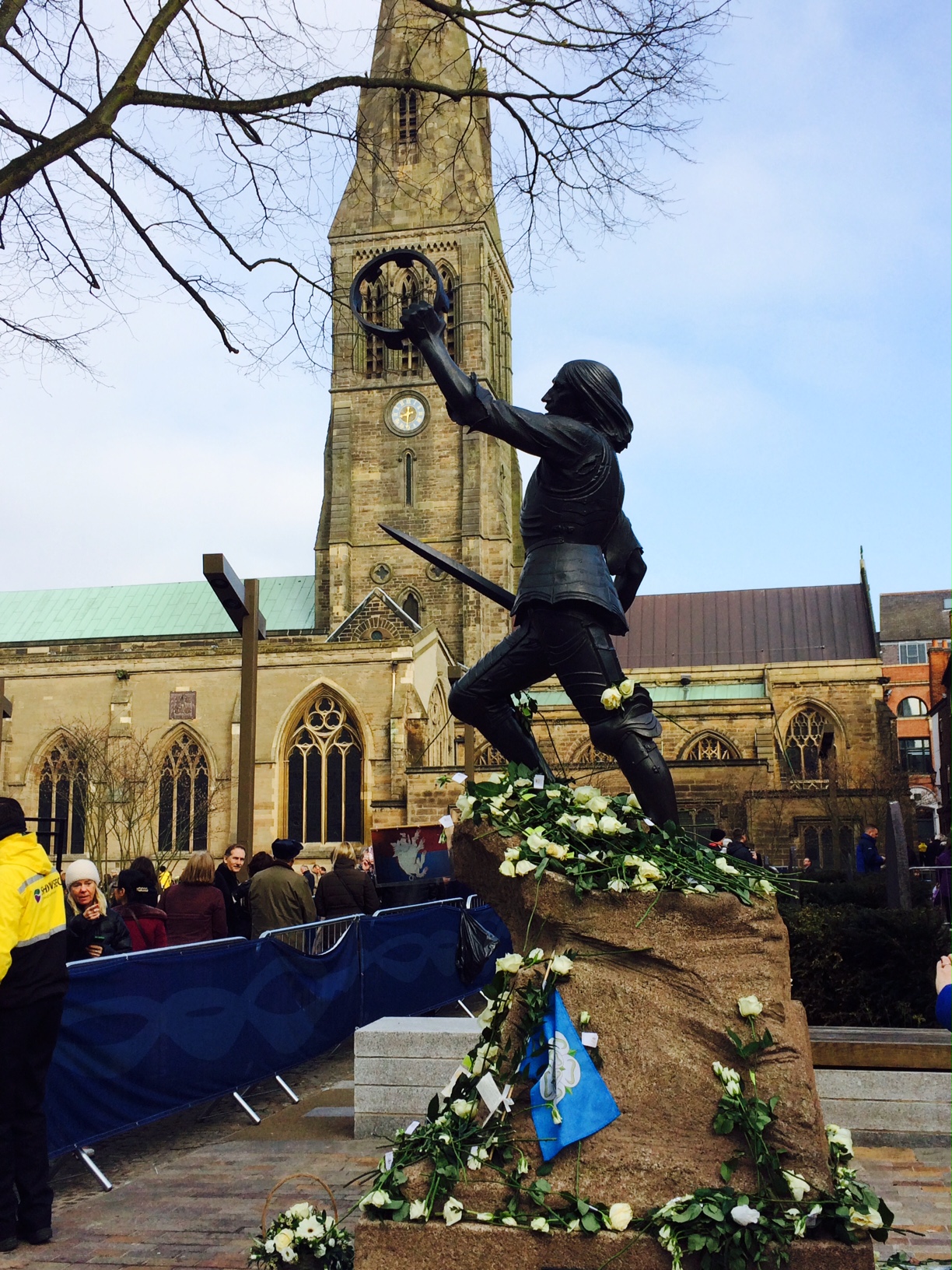
On Thursday there was the main service if internment, a high profile affair featuring the Archbishop of Canterbury and Benedict Cumberbatch – something for everyone! Tickets had been allocated after a ballot – we hadn’t applied, although on reflection I wish I had done – as they say, you need to be in it to win it, and I would have liked to have attended. I happened to be passing the end of the Lane leading to the Cathedral on Thursday lunchtime, and popped down just to see what was going on, arriving just as the congregation were leaving, and key people were being interviewed close to where I was standing, including Philippa Langley who led the search for the remains but I had my own bones to search for, for the dogs, and was shortly on call, and consequently I didn’t stop.
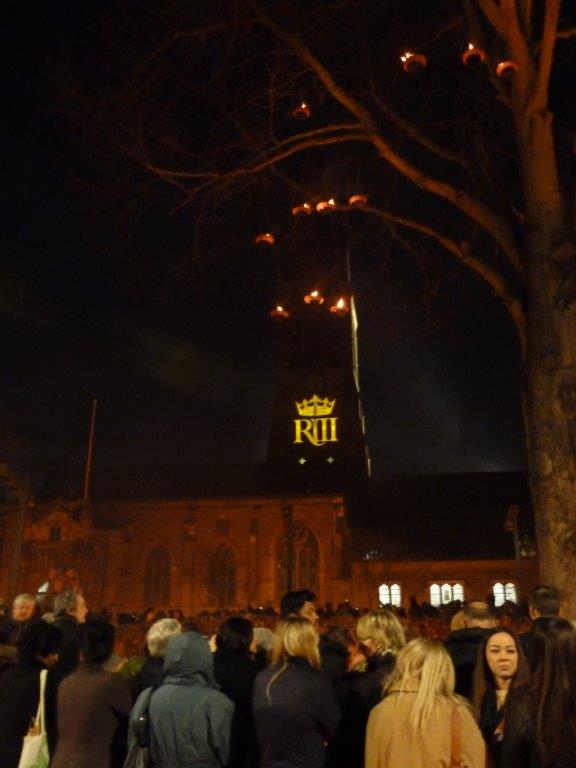
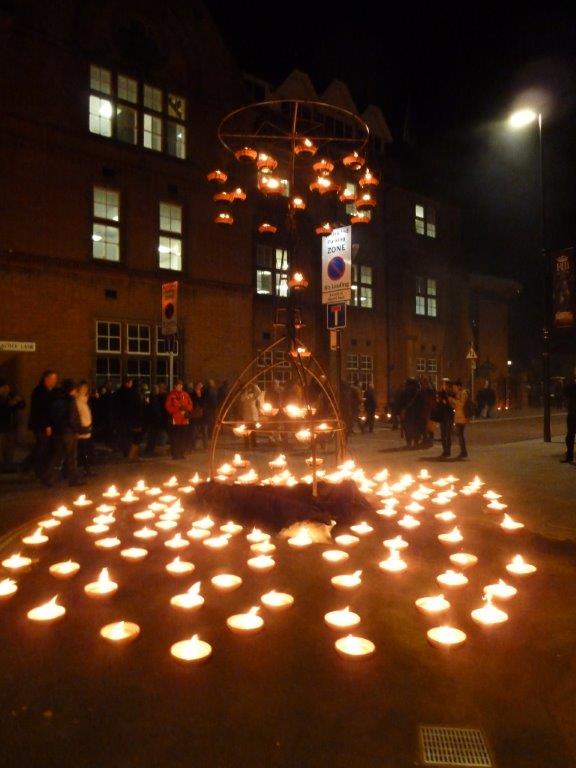
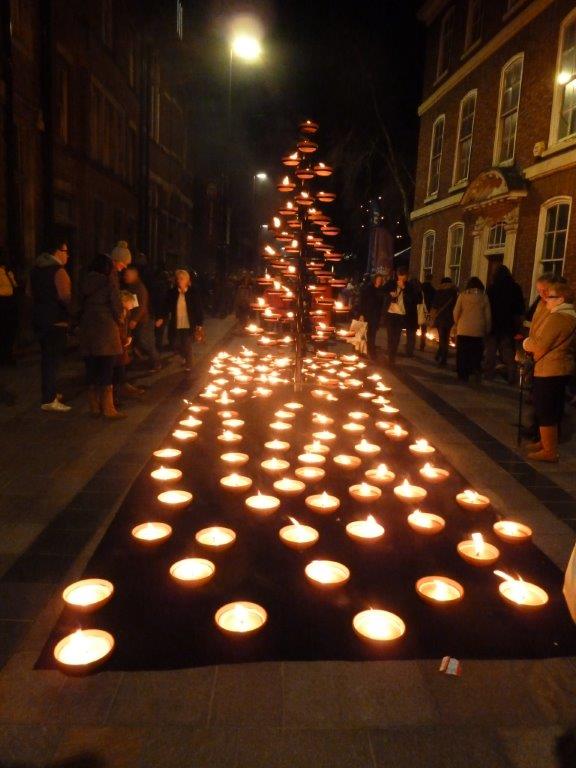
On Friday the week concluded with a “Leicester Glowing” event, 8000 flames in front of the Cathedral and forming sculptures along the Lane leading to the Cathedral, together with a “pyrotechnics” show. I stayed in Leicester until dark and went to see this, and it was impressive, and very very busy. Since I had to cycle home I left before the pyrotechnics, but still enjoyed the show of flames, and the lively atmosphere along the Lane.
Throughout the week there have been talks and guided tours connected to the internment, and I would have liked to have gone to all of them! If only we were retired.
There has, of course, been loads of discussion on the office and pub about whether such time and effort should have been spent on King who reigned for just two years, and who, by all accounts, was ruthless in gaining the crown, with a fair sprinkling of murders, including, allegedly, the Princes in the Tower. The general view is that this should be viewed in the context of the time, when Royalty was ruthless, or they ceased to be Royalty. And in any case, when it comes to tourism, Leicester needs all the help it can get….
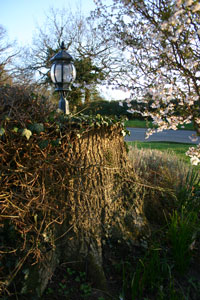 Technically we live in Oaktree House, but sadly the tree had to go.
We now have a thriving Oakstump at the front of the house.
Technically we live in Oaktree House, but sadly the tree had to go.
We now have a thriving Oakstump at the front of the house.