
I spent last weekend on a Thames Barge on the Blackwater Estuary in Essex, with Scraggy Crows plus a few “hangers on”. Chantal had also booked, but decided that it wasn’t her thing, what with no showers, no hot water, plenty of cold breeze, and having to supply food and cook it for ourselves as well as for the 3 man crew, particularly since two of the other ladies dropped out. Anyway, at least I could relax without worrying about my wife.
After a tortuously traffic-congested journey my friend Duncan and I, who were car sharing, arrived at Maldon quay in the dark. The others had already retired to an adjacent pub for a meal, but since we had found ourselves in queuing traffic, tired, hungry, in need of a wee and conveniently adjacent to a pub, we had already eaten. We managed to locate “our” barge, sandwiched between two others, and dumped our luggage before joining the others for a pint.
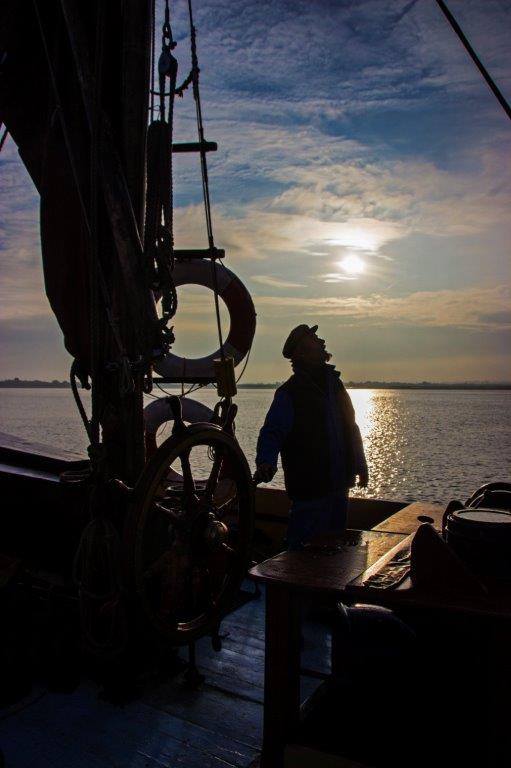
The Trust that operates the barge recommended that groups chartering the boat organise themselves into “Watches”, all very Naval, to ensure that washing up, cooking and various other tasks were allocated fairly. Despite me pointing out that Scraggy Crows had been happily organising themselves more informally for decades, and it had always worked, Dave, who had organised the trip, produced a chart and asked for volunteers for each “Watch”. The first Watch was at 0130 that morning, assisting the crew (in practice making tea) as the barge was manoeuvred under power, rather than sail, away from the quay, catching the high tide and anchoring offshore. Since Duncan and I had realised that, as the last on board, we had the cabin just a wooden partition away from the barge’s large diesel engine, we volunteered.
Thus at 1.30am Duncan and I climbed the steep stairs to the deck, having been awake for a while – preparing to leave a quay appeared to involve a lot of activity on deck directly above our heads. Within minutes the engine was started and the boat nosed its way out into the darkness, a paraffin lamp at the top of the mast broadcasting our position, and the second-in-command using a bright torch at the bow to check for obstacles in the water while we were still close to the shore. Despite the thudding diesel engine it all felt quite peaceful. I had time to make tea for all before we dropped anchor an hour later in the middle of the estuary, and we returned to bed.
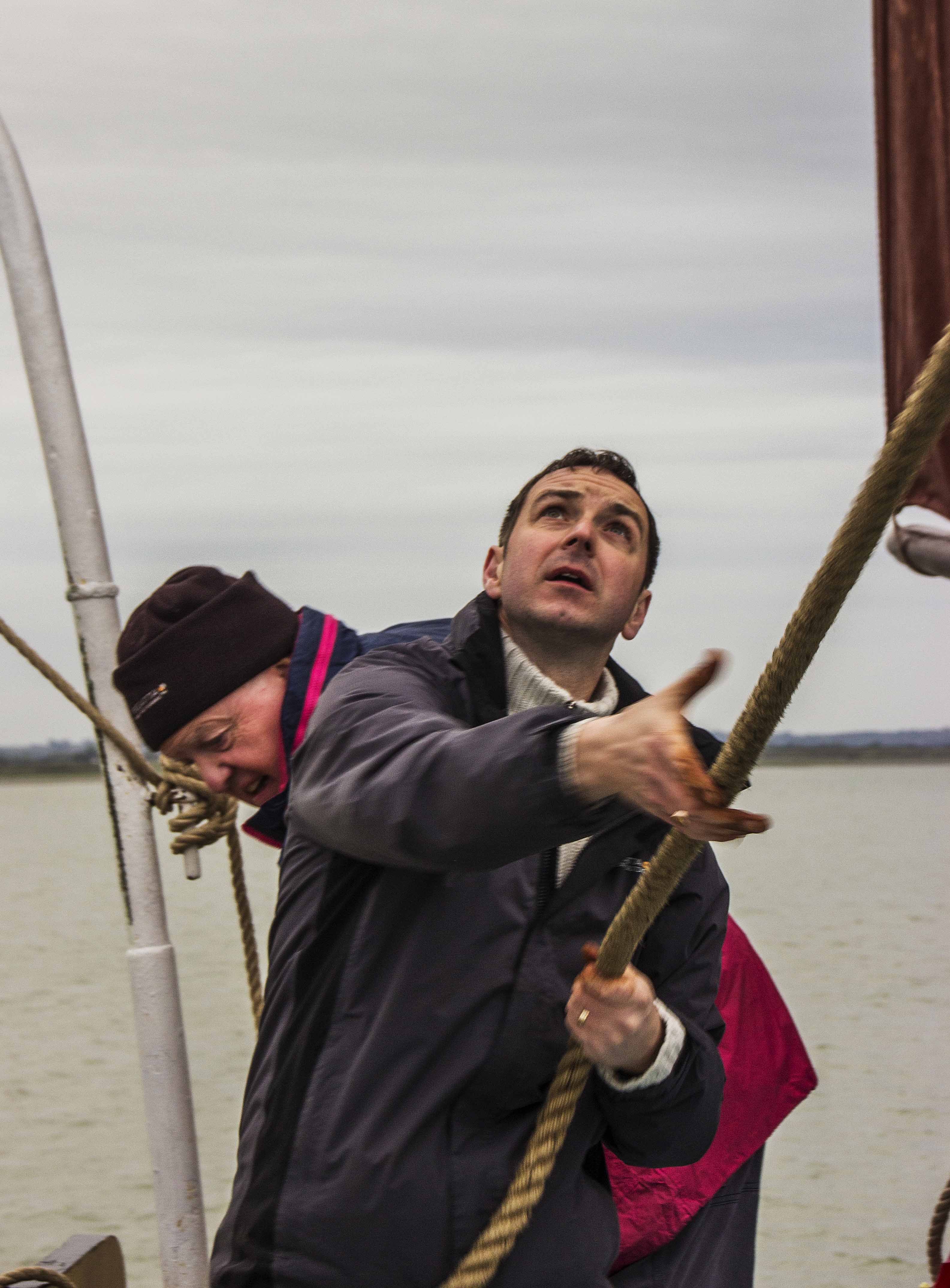
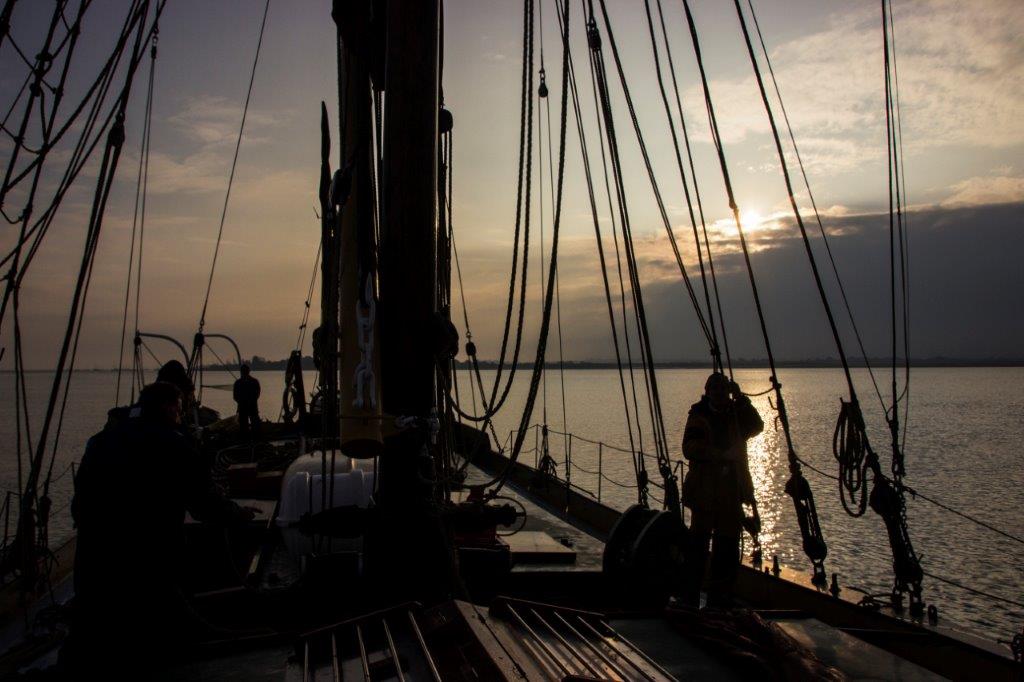
The following morning, after a hearty breakfast, it was literally all hands on deck to raise the anchor and set the sails, involving a lot of rather technical maritime language concerning tacks and shrouds and blocks. I just followed the principle that if a rope was put into my hand, I hauled on it until told to stop – it generally seemed successful. By 9am we were heading downstream on a grey breezy day, each shore a long way away on either side, although, thanks to a headwind, we were heading for the left bank.
By 10.30am I had decided that I’d seen quite enough of grey water going by, when it all became active again as we prepared to go about, turning the barge across the wind to tack back across the estuary, with more shouting in a maritime language, this time a little more frantic since timing appeared to be critical. I decided to contribute by keeping out of the way, since there seemed to be enough people in our party who spoke fluent maritime without requiring an explanation. The huge sails swung across the deck and were heading back across the open water towards the right bank.
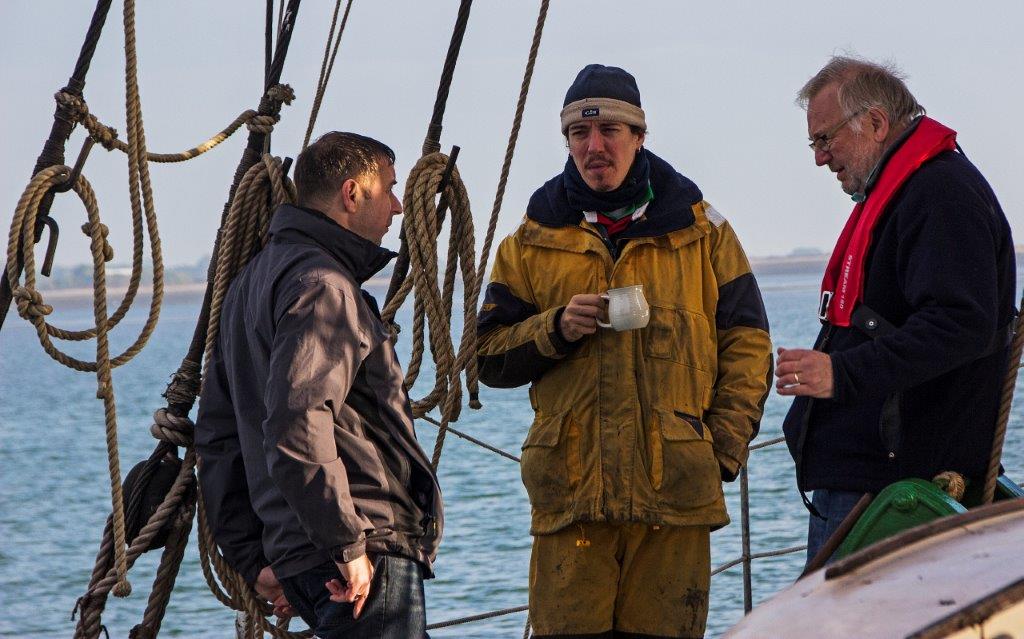
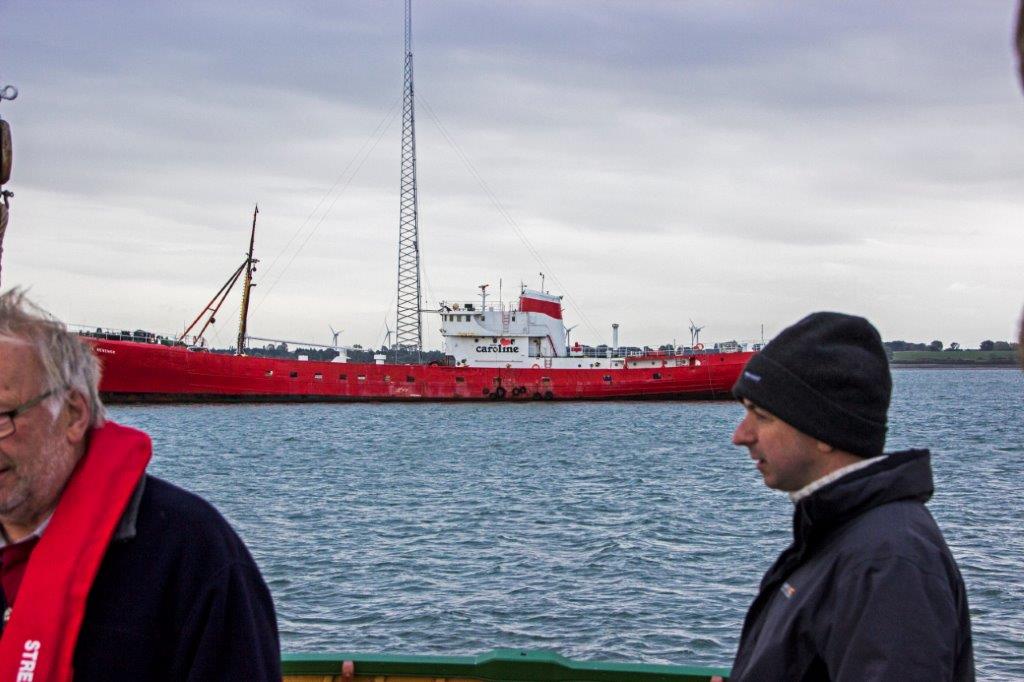
This pretty much described most of the day, an hour so of relaxed chilling out and chatting, watching the water flow by, followed by minutes of frantic activity with ropes. We passed other sailing barges, generally smaller, and we passed the Good Ship “Caroline”, of Pirate Radio Caroline fame, now moored in the Blackwater Estuary.
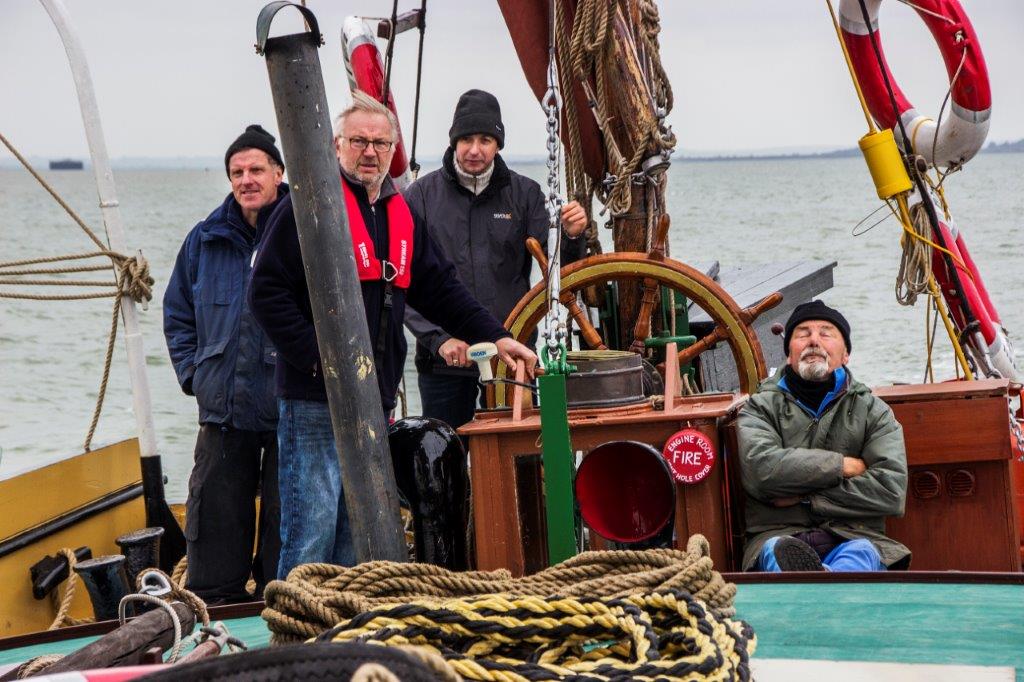
I was encouraged to take the wheel with an instruction to head for the tip of a distant headland. This wasn’t easy. I kept the bow aimed directly in the direction of the headland, only to find that it was one of those headlands that have a tendency to drift across the horizon, and it disappeared behind the sails, only to reappear on the starboard side. I turned right a bit towards the headlands new location, only to find that the headland had decided that its original location had been OK after all, and once again it disappeared behind the sails, this time reappearing off to the left. Eventually someone onshore realised that a headland drifting like an iceberg is not natural, and after 20 minutes or so it appeared to have been anchored to the sea floor, and generally only drifted a little bit, presumably taking up the slack of the anchor chain.
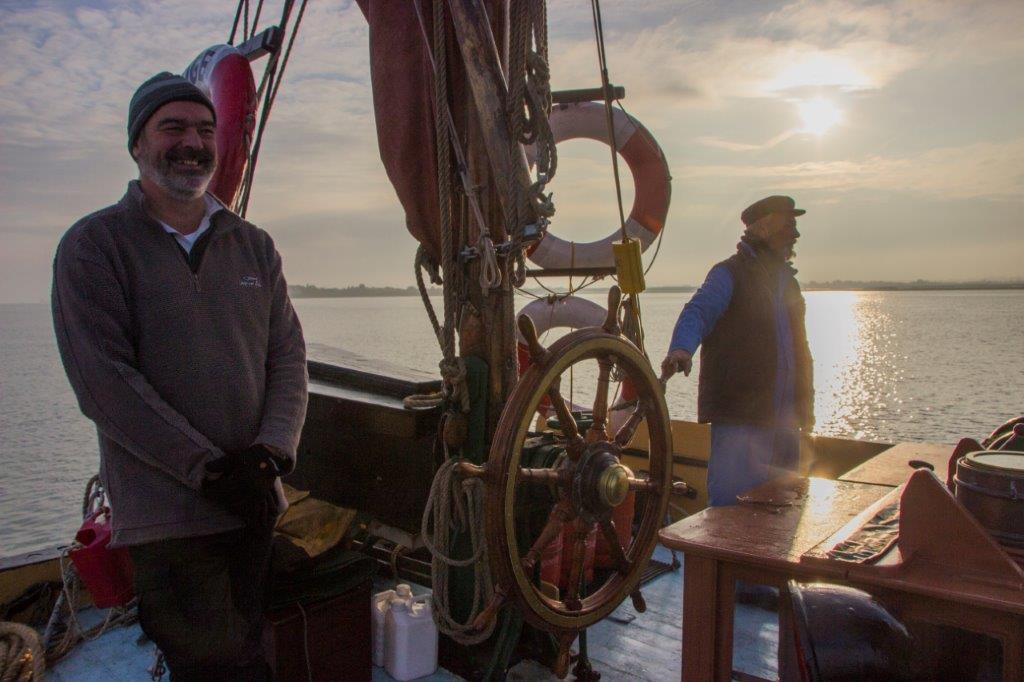
I have to say that the big ships compass in front of the wheel wasn’t very helpful. Since the headland was due east when I started, I should have been able to rely on keeping to this bearing, but someone on board was apparently carrying a magnet, and consequently the needle had a tendency to swing around, making steering a true course somewhat difficult. I think I did rather well under the circumstances, but was relieved when we had to steer around a buoy that I couldn’t see, and the skipper felt that it was time for him to take over to avoid a shallow sandbank.
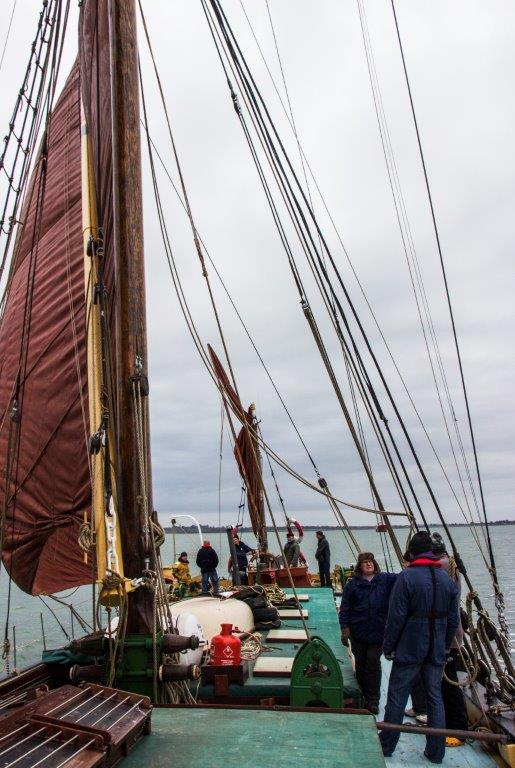
By mid-afternoon we were tacked-out, having zig-zagged to the mouth of the estuary. I wondered whether we would turn north up the coast towards Clacton or south towards the Thames estuary before anchoring for the night, but instead we turned about and rode the wind and incoming tide back to where we had anchored the previous night, close to a large island. The outward trip had taken us about 5 hours, the return trip not much more than an hour.
Once more it was all hands on deck, this time lowering and rolling the sails, and finally scrubbing the deck, a task that I found myself more suited to than all that messing about with ropes.
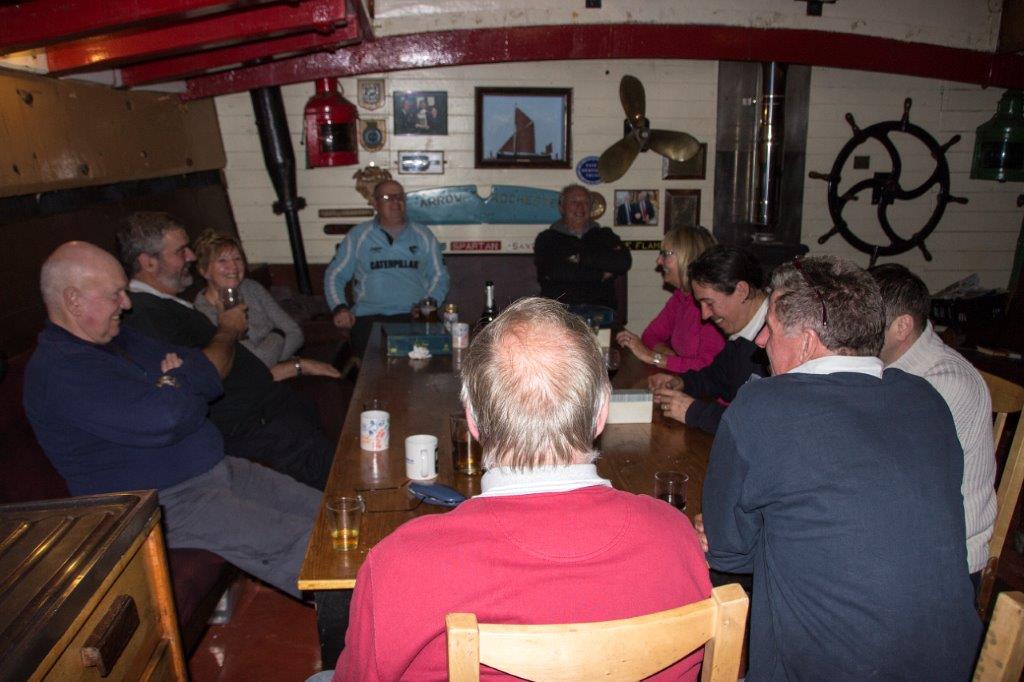
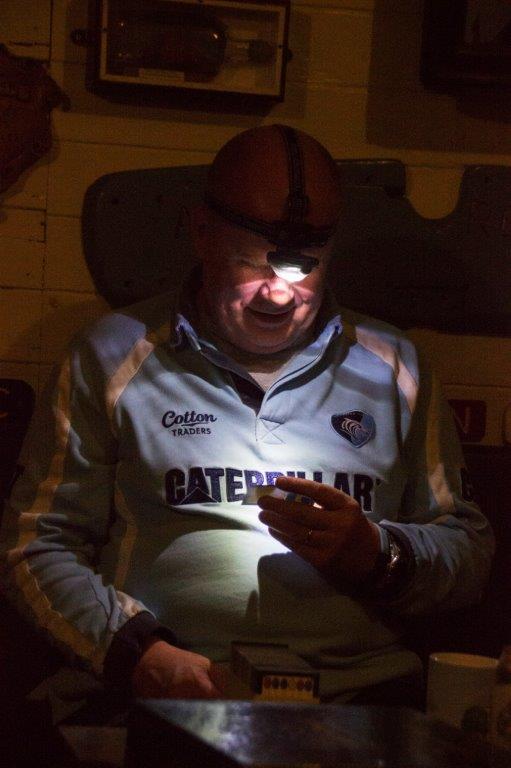
We had a pleasant evening in the cosy main cabin, with its wood burner, and dim 24v lighting, as we chatted, read, ate, chatted some more, and finally ended the evening entertaining ourselves by answering somewhat outdated Trivial Pursuits questions. A suggestion to play a game of Trivial Pursuits that had been discovered in a cupboard had met with mutiny, and attempting the questions, jointly seemed a reasonable compromise. Mugs of tea led to beer which in turn led to wine and then, for some, whisky – there was as much liquid flowing in the cabin as below the hull.
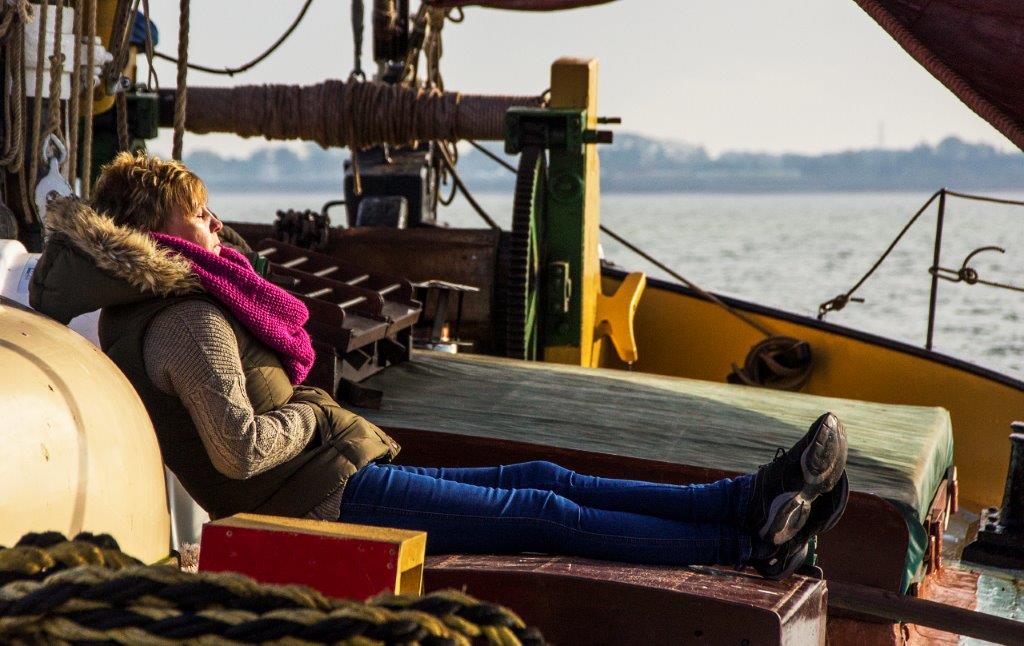
Sunday dawned bright and for much of the day was actually sunny. After breakfast the routine of setting sail commenced, and once again we tacked downstream, this time against a lighter breeze. We passed the same landmarks (watermarks?) as on the previous day, but in the sunshine the atmosphere on deck was even more chilled, with some caught sunbathing, albeit while wrapped up warmly. This time the skipper was clock watching, or rather tide watching, since we had to moor up at high tide, give or take an hour or so, and consequently we didn’t quite reach the mouth of the estuary before turning and once again riding the wind and tide inland.
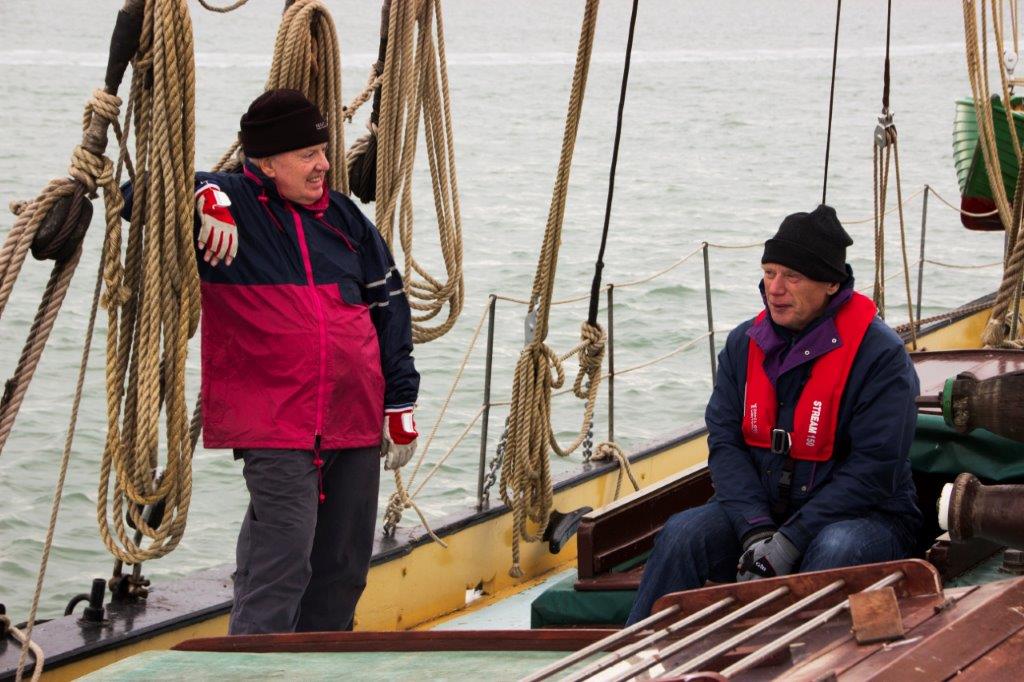
We dropped anchor a couple of miles from Maldon, where we had first embarked, and dropped the sails, folding them, and generally cleaning and tidying the barge before the engine was started and we motored through the various channels back to where we had set off. It had been dark when we navigated these channels out into the estuary, but this time we were able to enjoy the view and activities on the river banks before we eventually reached the quay, and with a bit of manoeuvring we moored up
It had been an interesting weekend, and I’m glad that I went, but once you have seen a bit of the middle of a wide estuary, you have seen all of it, and I suppose that with a large sailing barge one can’t exactly hug the river banks for an interesting view. I’m not sure that I would go again.
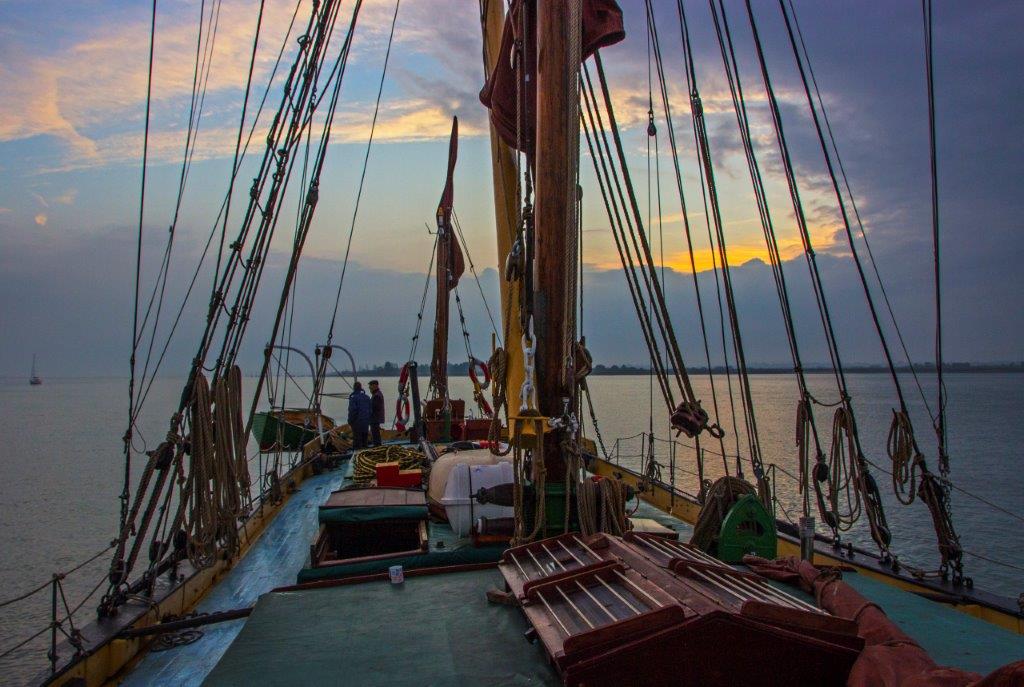
More photos in “Our Recent Photos
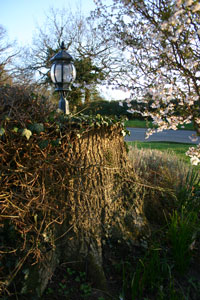 Technically we live in Oaktree House, but sadly the tree had to go.
We now have a thriving Oakstump at the front of the house.
Technically we live in Oaktree House, but sadly the tree had to go.
We now have a thriving Oakstump at the front of the house.